
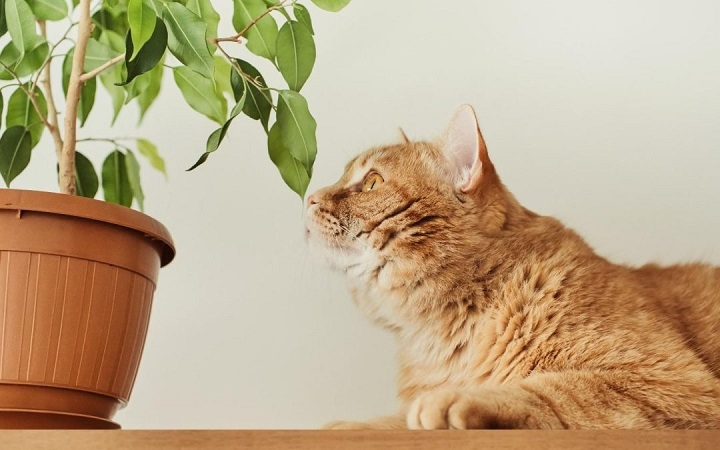
The money tree (Pachira aquatica) is a popular houseplant known for its braided trunk and lush green leaves. While it adds beauty to your home and is believed to bring good fortune, pet owners often wonder if it’s safe for their furry friends. This guide explores whether the money tree is toxic to cats, what symptoms to watch for, and how to create a pet-safe environment.
Is the Money Tree Toxic to Cats?
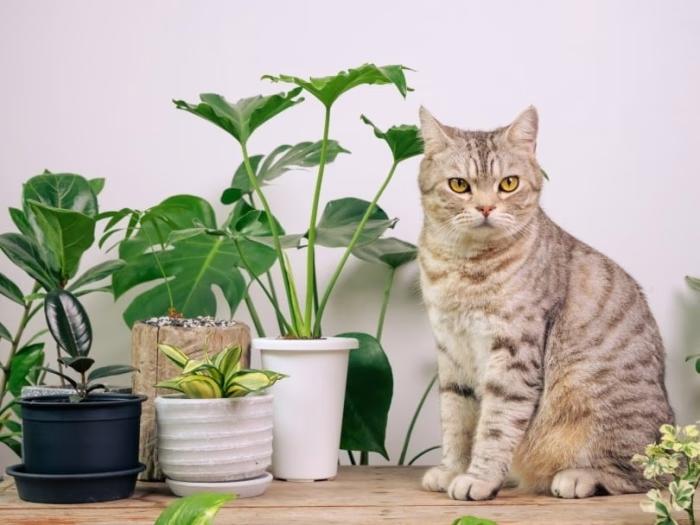
The money tree (Pachira aquatica) is not toxic to cats according to the ASPCA (American Society for the Prevention of Cruelty to Animals). It is considered a safe plant for households with cats, making it an excellent choice for pet-friendly decor.
Key Features:
- Scientific Name: Pachira aquatica
- Toxicity: Non-toxic to cats, dogs, and humans.
- Safety: While non-toxic, excessive consumption of the plant may cause mild gastrointestinal upset.
Potential Risks for Cats
While the money tree itself is not harmful, cats can still experience issues if they interact with the plant in certain ways.
Common Risks:
- Mild Upset Stomach:
- Chewing on leaves may cause minor vomiting or diarrhea due to plant material being difficult to digest.
- Choking Hazard:
- Pieces of leaves or stems can pose a choking risk, particularly for kittens.
- Pesticides or Fertilizers:
- If treated with chemicals, the plant could become harmful if ingested.
Also Read: Are Money Trees Toxic to Cats?
Signs of Plant Ingestion in Cats
Even though the money tree isn’t toxic, eating any plant material may lead to mild symptoms. Monitor your cat if you notice them chewing on the plant.
Symptoms to Watch For:
- Vomiting
- Diarrhea
- Drooling
- Reduced appetite
- Lethargy
What to Do:
- Remove access to the plant if symptoms occur.
- Provide fresh water and observe your cat’s behavior.
- Contact a veterinarian if symptoms persist or worsen.
How to Keep Your Money Tree Safe for Cats
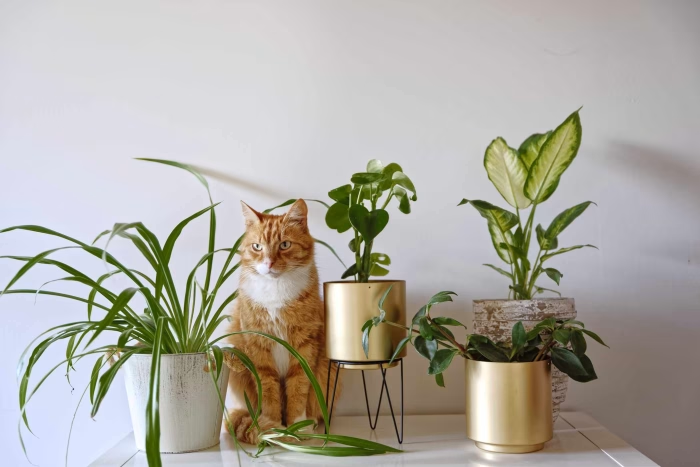
While the money tree is pet-friendly, it’s still a good idea to minimize interactions to protect both the plant and your cat.
Tips for Cat-Proofing Your Money Tree:
- Placement:
- Place the plant on a high shelf, table, or hanging planter to keep it out of reach.
- Distractions:
- Provide your cat with alternative chewable options, such as cat grass or toys.
- Training:
- Use positive reinforcement to discourage your cat from chewing on plants.
- Protective Barriers:
- Add decorative fencing or place the plant in a room your cat doesn’t frequent.
Alternative Cat-Safe Plants
If you’re looking for more greenery to complement your money tree, consider these other cat-safe plants:
Non-Toxic Houseplants:
- Spider Plant (Chlorophytum comosum): Safe and visually appealing.
- Areca Palm (Dypsis lutescens): Adds tropical flair to your home.
- Parlor Palm (Chamaedorea elegans): Another pet-friendly and easy-to-care-for option.
Cat-Specific Plants:
- Cat Grass: Provides a safe alternative for chewing.
- Catnip: A fun and stimulating plant for feline companions.
FAQs
Can my cat become ill if it chews a money tree?
Although the money tree is harmless, huge amounts of chewing may cause mild vomiting or diarrhoea due to indigestion.
Can I assume that all money tree varieties are safe to be around cats?
Yes, this plant is actually recognized as safe for cats across the globe in their summary of Pachira aquatica.
What do I do with my new money tree so that my cat does not eat it?
Remove the plant further, give other things for the child to chew on, use screens or teach the child to avoid the plant.
What if my cat has ingested some leaves of the money tree?
Make sure you do not leave your cat alone as you monitor their comfort levels at every moment. See a vet if the signs do not resolve or if you are unsure.
Is it possible that other conventional houseplants are poisonous to cats?
So, some of the plants which are toxic are pothos, lilies, philodendrons among others.
Anytime a plant is to be brought into a home, one ought to first look up its particular safety.
The money tree (Pachira Guanensis), is one of the best plants for people with cats as it is entirely safe and non-toxic to cats. Indulging in small portions every now and then can cause them an uncomfortable tummy occasionally but it’s certainly no threat to your cat’s life or health. It is possible to adopt precautionary measures that would ensure both your plant and your cat are safe in order to live in a stunning green home while owning a cat.