For many cat fanciers, the idea of a bobcat combined with a domestic cat has a certain romantic appeal. Called hybrid cats, these unusual felines naturally raise curiosity because of their wild appearance and possible blend of domestic and bobcat characteristics. But can bobcats really be bred with domestic cats, and what should you know if you are thinking of bringing a hybrid kitten into your home? Here, we shall delve into the facts, myths, and challenges of owning a mix between a bobcat and a domestic cat.
Can Domestic Cats and Bobcats Mate?
The notion of feline hybrids has some underlying biology. Domestic cats and bobcats are different species. There have been some reported cases of hybrids, but these matings are so rare biologically that they cannot be confirmed by science. Most “bobcat mixes” are simply domestic cats bred to look like bobcats.
Appearance of a Bobcat-Domestic Cat Mix
If a hybrid does occur, or if a domestic cat has been inbred to resemble a bobcat, they could display the following features:
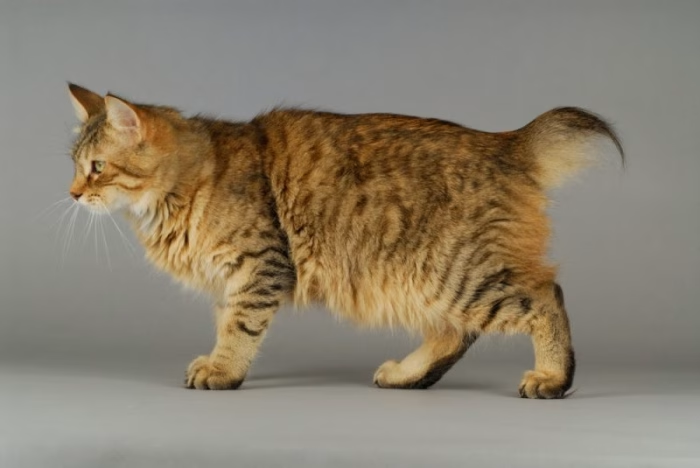
- Wild Features: Tufted ears, short tails, or large paws, mimicking bobcat characteristics.
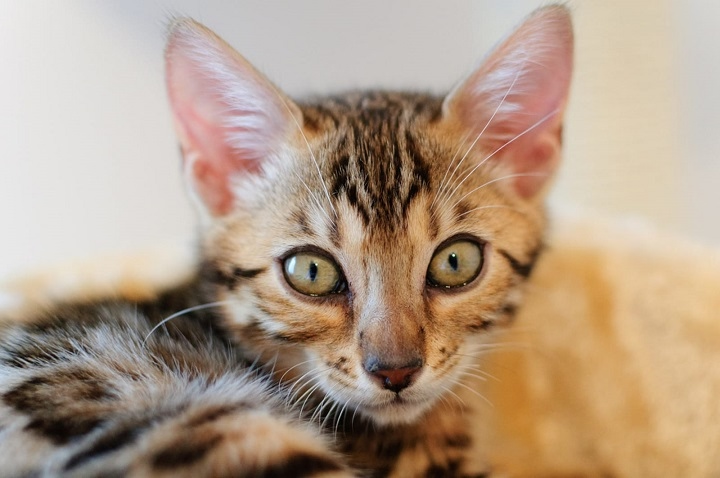
- Coat Pattern: Spotted or marbled fur similar to a bobcat’s natural camouflage.
- Size: Larger than the average domestic cat, but smaller than a bobcat. Such bobcat-like appearances are often the result of selective breeding with domestic cats, like Bengals or Savannahs.
Behavioral Traits of Bobcat Mixes
If they do exist, the personality of a bobcat mix would be determined by their parents. Here’s what to expect:
- Energetic and Playful: Hybrids may be more energetic than domestic cats.
- Independent: Bobcats are solitary in the wild, and hybrids may be more independent.
- Curious and Adventurous: They may like to explore their environment and climb.
Caring for a Bobcat-Domestic Cat Hybrid
Owning a cat that may have wild traits or exhibit wild-like behavior carries special considerations:
Diet and Nutrition:
- Feed them a high-protein diet for energy requirements.
- Add in raw or specially formulated foods if they have wild-cat tendencies.
Space and Enrichment:
- Provide ample space for them to roam and explore.
- Interactive toys, scratching posts, and climbing structures.
Also Read: Buff-Colored Cats
Socialization and Training:
- Early socialization is essential for making the hybrids comfortable with people as well as other pets.
- Positive reinforcement for training; Punishment-based methods should be completely avoided.
Health and Veterinary Care:
- Regular checkup with a vet who has already dealt with hybrid or exotic breeds.
- Keep informed about health conditions common with larger or wild-influenced cats.
Legal and Ethical Considerations
Many regions restrict or forbid the ownership of hybrid cats with wild ancestors, such as bobcats. Before adopting or buying, check local laws and make sure:
- The breeder is responsible and does not break any laws.
- The cat does not have recent wild ancestry to prevent legal issues with wildlife protection.
Problems of Being a Hybrid Cat Owner
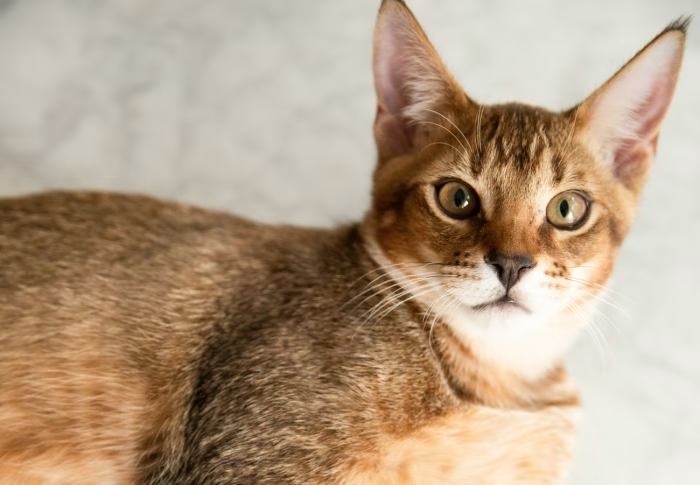
While hybrids can be captivating, they bring several difficulties:
- Temperament: Hybrids may be more difficult to handle and less predictable than a fully domestic cat.
- Energy Levels: High activity needs can overwhelm first-time cat owners.
- Legal Issues: Ownership laws can vary widely.
- Cost: Hybrids or bobcat-like domestic cats are often expensive to breed and purchase.
Alternative Breeds Resembling Bobcats
If you’re drawn to the look of a bobcat but want a purely domestic pet, consider these breeds:
- Pixie-Bob: Specifically bred to resemble bobcats, with tufted ears and bobbed tails.
- Bengal: Known for their wild, spotted coats.
- Savannah: A domestic cat/serval hybrid with an exotic look.
- Maine Coon: Very large, tufted, and with a wild-cat look, yet with a friendly temperament.
How to Differentiate Bobcat-like Cats
Domestic cats are often mistaken for hybrids simply because they appear like one. Look for the following:
- Large size or tufted ears: Seen in breeds such as Maine Coons.
- Spotted or marbled coat patterns: In Bengals or Savannahs.
- Short or bobbed tail: A common variation in breeds.
Closing Remarks
While the idea of a bobcat mixed with a domestic cat is intriguing, true hybrids are rare or nonexistent. Instead, many domestic cats are bred to mimic the wild beauty of a bobcat. If you’re considering adding a bobcat-like cat to your home, research breeds like Pixie-Bobs or Bengals to find a feline with the perfect mix of exotic looks and domestic temperament. Always be prepared for the care and commitment these special cats need.